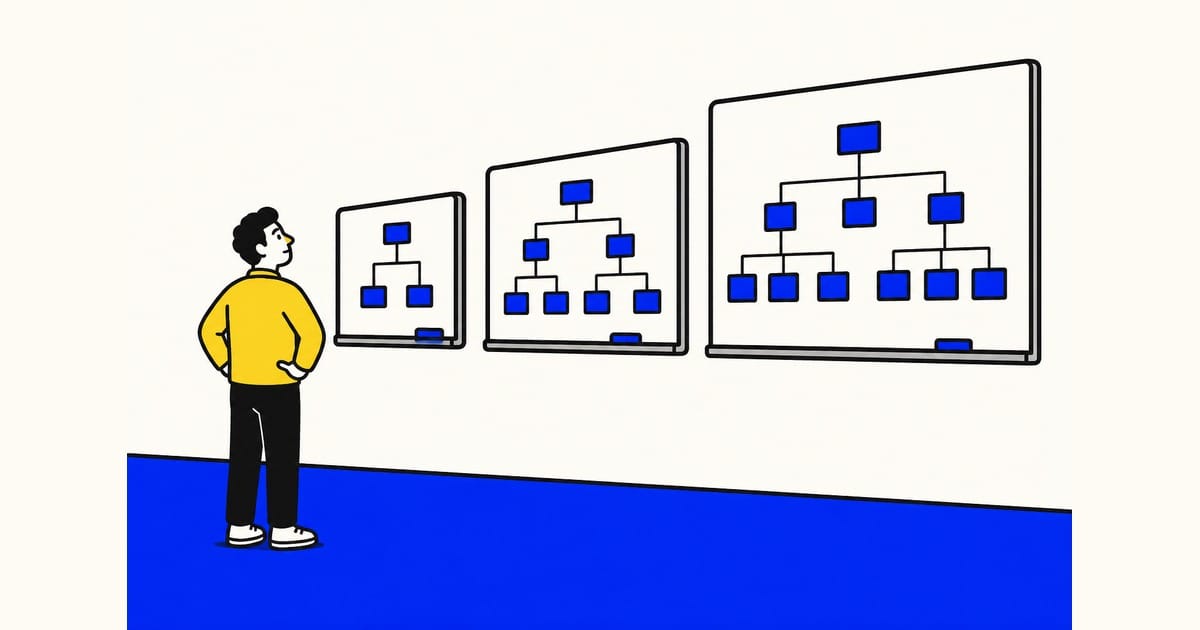

With the unique set of conditions found in a marketplace business, getting the organizational design and structure question right will lead to higher engagement and satisfaction for both sides of the platform.
For my part, this is the part of marketplaces that is so fun and challenging. Supply customers want (among other things) access to large markets, low cost / frictionless integration with their existing systems, and higher margins. Consumers want one stop shop / complete inventory, frictionless digital shopping, and above all - best value for their money. Unlike pure B2B (or pure eComm/B2C) businesses, Marketplaces like Invaluable deliver a singular platform with products / experiences that satisfy both sides to get customers to stick.
If we believe that Supply is a B2B play and Demand is a B2C play, it helps make the 'one team vs. two teams' decision easier. The product org structure that works for a single-sided product almost always breaks down when you try to serve two fundamentally different customer types with the same team.
A singular team will struggle mightily to do both of these things very well. A methodical evaluation of a source of supply’s existing business process and tech stack requires a different mindset than a Speed Wins “let’s just test it and see what happens” mindset of the consumer PM. The Go-to-Market motions of products delivered to the B2B / supply side are wildly different from the consumer side.product org structure
Most marketplace product teams are organized as if they serve one customer. They serve two. And those two customers frequently want opposite things.
On the other extreme, having these two parts of the product org too far from each other cause a different kind of issue. This probably doesn’t matter yet at a company the size and scale of Invaluable, but for example - when I started TripAdvisor I initially owned the consumer experience of meta (and then IB/eCommerce) and a whole different set of orgs owned Hotel Supply. Following the org chart in place at the time, all of these teams in question didn’t come together under one leader until you got to the CEO. A “simple” consumer request such as “filtering on room availability based on # of children vs. # of adults” that was a 1 hour UI project for the Consumer UX, was a massive Platform API upgrade that needed to pushed out to hundreds of supply partners & supported by B2B Marketing efforts. You can imagine how long it took to deliver. When the org evolved to bring Hotel Supply and Hotel Consumer Experience under one roof, I were then able to effect bigger, more strategic projects that were driven either from the Consumer-down to Supply (eg. give us consumers access to more Hotel room photos to make a purchase decision) and vice versa from Supply up to Consumer (eg. give us Hoteliers the ability to swap out our internet booking engine endpoint because we have found a better deal with a new vendor).
Prevailing wisdom on where and when to invest into the two parts of this org is to focus on Supply-side concerns first, which Invaluable has done, move on to Demand-side, and to split the teams out when there is enough capital in the business to fund a full second team. I operate with the definition of “full team” as something like: a PM, 6 or so engineers, analyst, and a UX / Customer Research lead. It would not be ideal to take the existing “full team” on the Supply side, cut them in half and viola - we have the two teams we need. Instead, both will likely fail to reach objectives consistently.framework for growth
In growing marketplace businesses, there can be a grey area where there is less urgent need to solve for supply concerns, latent needs for consumer product or experience, but not enough funding available to commit to hiring a full additional team. The agile team says - we don’t have enough capacity to do all the work on both sides. The commercial teams / COO says - we can’t take on more OpEx until we achieve the outcomes that this body of work is expected to deliver. That’s a challenge in that this single team will feel whipped back and forth from Supply to Demand from one month/quarter to the next. That “stretched thin” feeling can be mitigated with good Product storytelling, and selective augmentation of the team via contract to access subject matter expertise that may not be available in house.
In summary, it's ideal to have two teams focused on their unique customer persona and needs, tightly aligned under one strategic set of product principles. The separation creates focus. The alignment prevents the platform from being pulled apart by conflicting priorities.
Structuring a Marketplace Product Organization?
Supply-demand org design is one of the most nuanced challenges in marketplace product leadership. I've built and restructured these organizations at TripAdvisor and other two-sided platforms. Let's talk.