
Startup acquisition is a graceful exit with a transaction attached. How you prepare the company, represent the team, and handle the transition determines whether the outcome is actually good for the people who built it.
EditMe was a SaaS wiki platform I co-founded with Matt Wiseley. We had bootstrapped to about 5,000 customers at $5 a month, won PC Magazine's Editor's Choice, and were doing well enough that the question of what to do next was genuinely live. Matt wanted to run a self-sustaining business. I wanted to raise and compete against PBwiki. We had different visions for where the company should go. The Wakefly conversation resolved that tension in a way that worked for both of us.
What the naysayers got wrong
The hardest moment in an acquisition is when the founder leaves the combined entity. The transition plan that looked reasonable at signing rarely survives contact with the acquirer's culture and priorities.
The inputs that actually made a difference came from people who engaged with the specifics: Brian Balfour, David Cancel, John Prendergast. They pushed on the customer segmentation, the funnel math, the retention curve. That kind of engagement is worth ten opinions from people who have not looked at the numbers.
What I wish I had known
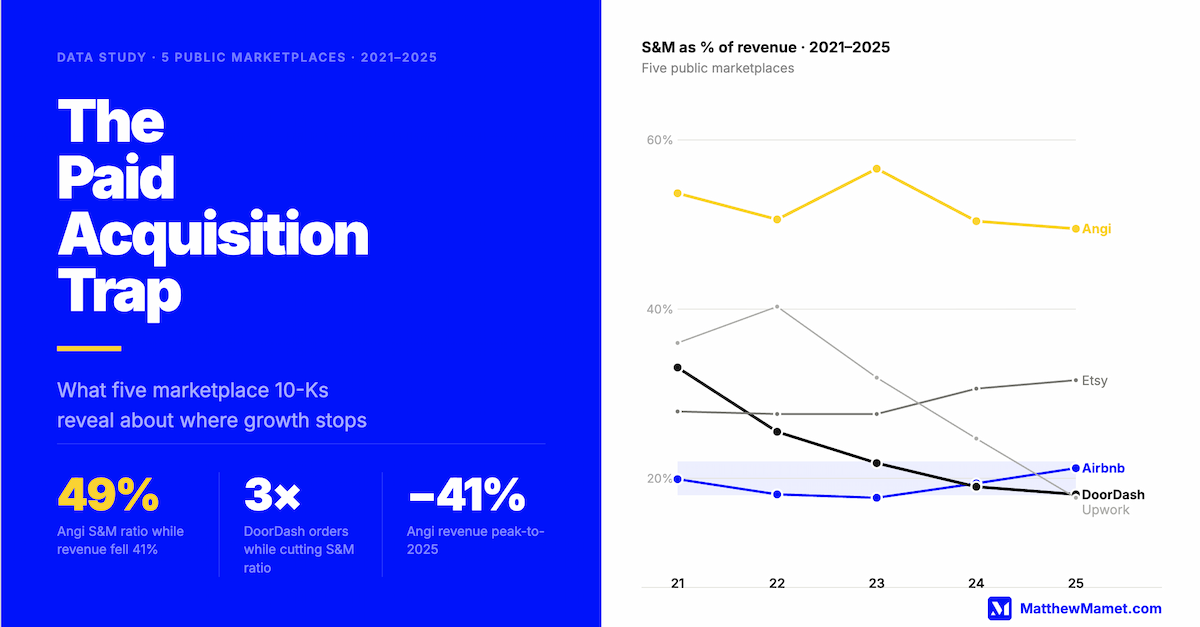
The product lessons from acquisition often reinforce what you should have known about product-market fit earlier: acquirers pay for strong retention, defensible positioning, and a product that cannot be easily replicated — not for revenue that requires constant acquisition spending to maintain.
The co-founder dynamic matters more than most people discuss honestly. Matt and I worked well together. We also had fundamentally different risk tolerances and different ideas about what success looked like. That tension was not a problem - it is normal. But it needed to be named and negotiated, not assumed away. The acquisition was partly a product decision and partly a resolution of that underlying tension.